Radiofrequency and Ultrasound Body Treatments: What Beauty Professionals Should Know
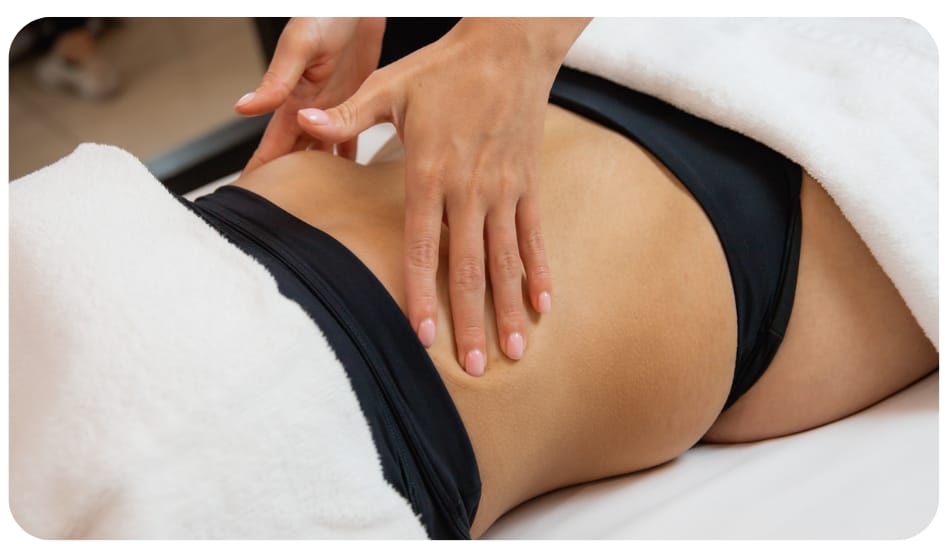
Radiofrequency (RF) and ultrasound are different energy-based technologies used in non-invasive body treatments. RF creates controlled heating in tissue and is commonly used for skin-firming goals. Ultrasound uses sound waves and, depending on the device, may be used for localized body contouring. Neither is a weight-loss treatment, and neither should be offered without device-specific training, client screening, and a clear understanding of professional scope.
For massage therapists and aestheticians, the most useful question is not which machine is more powerful. It is whether a particular device is appropriate for a particular client and goal. At ShapeFX Academy, we approach body services by separating what a device is designed to do from what a client hopes it will do. That distinction makes consultations safer and expectations more realistic.
The same principle applies if you offer Brazilian lymphatic drainage alongside body treatments. Manual massage, RF, and ultrasound act in different ways. Knowing where one service ends and another begins helps you build a coherent menu without implying that massage destroys fat cells or that an energy treatment treats a medical cause of swelling.
What radiofrequency and ultrasound body treatments are
Radiofrequency body treatment uses electromagnetic energy to produce controlled heat in tissue. The intended depth and effect depend on the device and applicator. In aesthetics, RF is commonly used to address the appearance of skin laxity and firmness. An RF treatment applied to intact skin is also distinct from RF microneedling, which involves needles and has different procedural risks and training requirements.
Ultrasound body treatment uses high-frequency sound waves. Ultrasound is a broad technology category, not a single procedure. Different systems deliver energy differently and have different intended uses. A device designed for localized contouring should not be treated as interchangeable with another ultrasound machine simply because the two share a name.
Some platforms combine the technologies. ShapeFX describes its Exilis Ultra 360 body-contouring service as combining ultrasound and RF for fat-reduction and skin-tightening goals. That describes a specific service, not every combined device on the market. Before recommending any platform, check its current manufacturer instructions, the intended treatment area, operator requirements, and applicable local rules.
RF versus ultrasound: the practical distinction
Clients may call every machine-based service “body sculpting,” but that umbrella term hides important differences. Use the technology and the device’s stated purpose to guide the conversation.
| Question | Radiofrequency | Ultrasound |
|---|---|---|
| What delivers the energy? | Electromagnetic energy produces controlled heating. | High-frequency sound waves deliver energy to tissue. |
| What is the usual consultation focus? | The appearance of firmness and skin laxity. | Localized contouring, when supported by that device’s intended use. |
| What should a client expect to feel? | Often warmth, although sensation depends on the system. | Sensation varies by system and may include warmth or vibration. |
| What must the practitioner verify? | Approved treatment areas, contraindications, applicator use, and heat monitoring instructions. | Approved treatment areas, contraindications, applicator use, and device-specific operating instructions. |
| What should never be promised? | A surgical lift or a guaranteed change in skin. | Weight loss or a guaranteed reduction in measurements. |
This is a comparison of concepts, not a treatment protocol. Two RF devices may have different instructions, just as two ultrasound devices may have different intended outcomes. If your supplier’s training leaves you unable to explain why a setting is appropriate, you are not ready to use that setting on a client.
Why combining them does not remove the need for assessment
A combined platform may let a trained operator address more than one aesthetic concern within a plan. It does not mean every client needs both types of energy, or that using both guarantees a stronger result. If a client’s main concern is substantial excess skin, a non-invasive treatment may not meet their expectations. If the concern is a small localized area, discuss the device’s intended use rather than implying the treatment will change overall body weight.
At ShapeFX Academy, we recommend writing down the primary concern before choosing any modality. Is the client asking about skin appearance, a localized contour, temporary puffiness, or a health symptom? Those are different conversations. A service menu should not turn them into one generic “inch loss” promise.
A consultation framework before you book a treatment
Good body-treatment planning starts before the client lies on the table. This framework is useful whether you already operate an RF or ultrasound device, are considering purchasing one, or are deciding when to refer a client elsewhere.
1. Translate the request into a specific goal
Ask what the client wants to change and what they mean by the words they use. “Tighten my stomach” could refer to skin laxity, abdominal muscle changes, bloating, or a desire to lose weight. Each calls for a different response, and some are outside an aesthetic practitioner’s role.
- Which area concerns you, and what do you notice about it?
- Are you asking about skin firmness, localized contour, or swelling?
- Have you previously tried a treatment in this area?
- What outcome would you consider meaningful, and over what timeframe?
Do not convert an unclear goal into a treatment package. First determine whether the service you actually offer is relevant.
2. Screen for reasons to pause or refer
Take a health history and examine the proposed treatment area within your scope. Ask about pregnancy, implanted electronic devices, relevant implants, recent procedures, wounds, infection, altered sensation, unexplained swelling, and conditions the device manufacturer lists as contraindications or precautions. These questions are prompts for assessment, not a universal clearance list.
A client with sudden one-sided leg swelling, chest pain, or shortness of breath needs urgent medical assessment, not a contouring appointment or a lymphatic massage. If the client has an unclear health history or a recently treated surgical area, pause and obtain appropriate medical guidance. Our guide to lymphatic drainage intake forms addresses the broader habit of collecting information before hands-on care.
3. Check whether you may offer the service
A certificate of attendance, ownership of a machine, and permission to operate it are not the same thing. Verify your professional scope, local requirements, liability insurance, workplace policies, and the manufacturer’s operator-training conditions. If you are an aesthetician or massage therapist, do not assume that training in manual bodywork authorizes every energy-based procedure.
Ask your insurer about the exact device and procedure, not just “body contouring.” Keep the response with your training and equipment records. Rules and coverage can differ by location, professional designation, and technology.
4. Match the device’s intended use to the client’s concern
Read the operator manual and product information for the exact model and applicator. Confirm which areas may be treated, how the operator is instructed to monitor the client, what conditions rule out treatment, and how adverse reactions should be managed. Do not borrow a setting, sequence, or session schedule from a different machine.
That caution matters especially when a platform combines modalities. A marketing description such as “ultrasound plus RF” does not tell you what exposures are appropriate or how to adapt a plan for an individual client.
5. Explain limits before seeking consent
Tell the client what the device is intended to address, what a session involves, what they may feel, what risks or precautions are relevant, and how you will assess progress. Give them room to ask questions and decline. Consent is meaningful only when the client understands that results vary and that non-invasive body treatment does not replace medical care, weight management, or surgery.
Use plain language. “This treatment is intended to improve the appearance of firmness in this area” is more informative than “It will melt fat and tighten everything.” If you cannot explain a claim in terms of the exact device and its documentation, leave it out.
6. Establish a baseline and reassessment plan
If the client agrees to photographs or measurements, record them consistently and protect their privacy. Keep lighting, position, distance, clothing coverage, and measurement points as similar as possible at follow-up. Document the concern the client identified, rather than selecting only the most flattering image afterward.
Our article on photographing results ethically and consistently is written for lymphatic services, but the underlying documentation principles apply to visual marketing across body treatments. A photograph cannot establish why someone’s appearance changed, and a temporary change should not be presented as permanent fat loss.
7. Record the session and respond to unexpected symptoms
Follow the manufacturer’s operating procedure throughout treatment. Record the device and applicator, treated area, relevant settings, duration, client feedback, skin response, and aftercare discussed. Stop if a client reports unexpected pain, burning, numbness, or another concerning sensation. Follow the device’s adverse-event guidance and arrange medical assessment when indicated.
“More heat” is not a quality standard. The goal is a treatment that follows the device instructions and remains appropriate for the client, not the most intense experience a client can tolerate.
Where Brazilian lymphatic drainage fits, and where it does not
Brazilian lymphatic drainage is a manual service. It is not another name for RF, ultrasound, or fat reduction. A client may seek massage because they enjoy the experience or want to discuss a feeling of puffiness. That does not mean the massage can reproduce a device’s intended effect or treat unexplained swelling.
Our approach at ShapeFX Academy is to keep the mechanisms and claims separate. If you offer both manual and device-based services, assess each one independently. Confirm that the client is suitable for massage, confirm that they are suitable for the device, and avoid assuming that one makes the other safer or more effective. The timing or combination of services should follow applicable device instructions and the client’s circumstances, not a blanket package formula.
There is an important distinction between an elective wellness client and someone recovering from surgery. The ShapeFX Method Masterclass teaches Brazilian lymphatic drainage, consultation, safety, consent, and technique, but it is not training for post-operative care within the first two to three months after surgery. A newly post-operative client needs care appropriate to their recovery and their surgeon’s instructions. Our separate discussion of post-operative lymphatic massage training explains why that specialization should not be inferred from a general bodywork course.
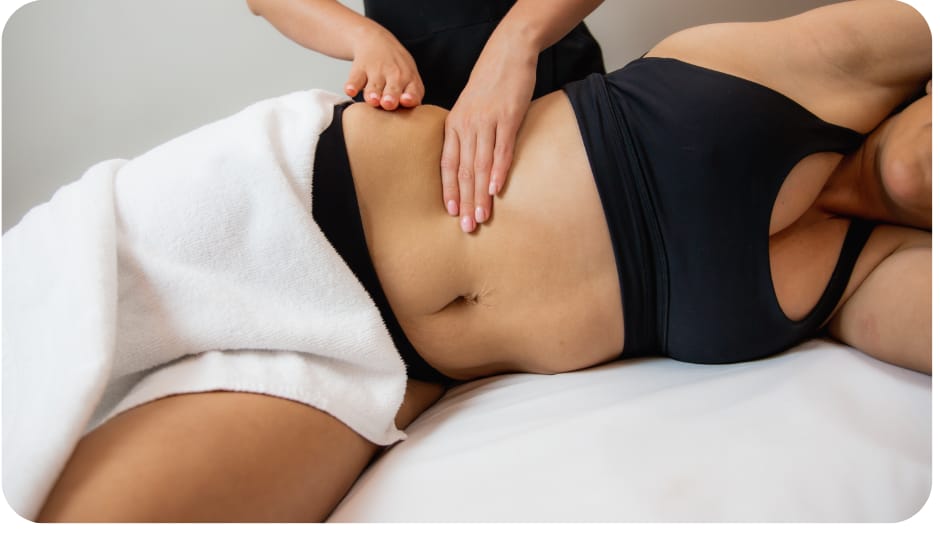
Manual abdominal work can be part of a lymphatic drainage session. The image illustrates hands-on massage, not an RF or ultrasound procedure.
Safety issues that deserve particular attention
Altered sensation and heat monitoring
When a treatment produces heat, the client’s ability to report discomfort matters. Reduced sensation is a reason to check the device guidance carefully and, where appropriate, postpone or refer. Do not treat a client’s silence as proof that the tissue is responding safely. Check in, observe the area as instructed, and stop when the response is unexpected.
Implants, pregnancy, and medical history
Device instructions may restrict use around implanted electronic devices or other implants and may identify pregnancy or particular medical conditions as reasons not to treat. There is no responsible universal yes-or-no answer for every machine. The exact model, treatment site, manufacturer guidance, and client history determine the next step.
Recent surgery and unexplained swelling
After surgery, the appearance and sensitivity of tissue can change as healing progresses. Do not add an energy-based treatment because a client wants faster recovery or because a contouring protocol worked for someone else. Clarify the procedure, healing status, and surgeon’s directions, then determine whether treatment is appropriate at all. Similarly, do not label sudden or unexplained swelling “fluid retention” and proceed as though it were a routine aesthetic concern.
Claims of zero risk
Non-invasive does not mean risk-free. A service may involve minimal routine downtime for suitable clients while still requiring careful screening, technique, and a plan for unexpected reactions. Avoid saying a treatment is universally painless, harmless, or safe for everyone. A client who feels sharp pain or burning should not be encouraged to endure it for a better result.
Best practices for adding energy-based body services
If you are considering an RF or ultrasound machine for your practice, evaluate the full service rather than the marketing brochure. At ShapeFX Academy, we encourage practitioners to think through five connected decisions:
- Competence: Can you explain the device’s intended use, screen for contraindications, operate it as instructed, and respond to an adverse reaction?
- Permission: Do your scope, insurance, workplace arrangements, and applicable local rules allow the exact service?
- Client fit: Is the person asking for an aesthetic outcome your device is designed to address, or do they need a different professional?
- Documentation: Can you show what was agreed, what you did, how the client responded, and how you assessed the result?
- Honest economics: Can the business sustain equipment, training, supplies, maintenance, insurance, and your time without relying on exaggerated outcomes to make sales?
Do not treat the purchase price as the only cost. Ask the supplier about training, servicing, consumables, and what happens when the machine is unavailable. Review your appointment length and room needs. If you plan to sell a course of treatments, explain how you will reassess suitability and progress rather than implying that completing a package guarantees a result.
The client experience also matters. Private intake, respectful draping, clear explanations, and a calm opportunity to decline are part of good practice. If a client raises a concern that the device cannot address, saying so builds more trust than finding a way to sell the treatment anyway.
How to describe outcomes without blurring the science
Body-treatment marketing often combines phrases that sound related but describe different things. “Less bloated,” “firmer-looking skin,” “fat reduction,” and “weight loss” should not be used as synonyms. Neither should a before-and-after photograph stand in for an explanation of the service delivered.
Consider these more precise ways to speak:
- For RF: “This service is intended to address the appearance of skin firmness in the treatment area. We will discuss your suitability and the device’s limits first.”
- For ultrasound contouring: “This is a localized body-contouring treatment, not a weight-loss program. Whether it suits your goal depends on assessment and the device’s intended use.”
- For lymphatic drainage: “This is a hands-on massage service. We will discuss what you hope to get from it and screen for reasons to postpone or refer.”
Avoid claims that one modality “flushes away” fat treated by another unless the claim is supported for the exact protocol you offer. Avoid promising that a visible change after massage proves permanent tissue change. We discuss similar language choices in our guide to marketing lymphatic drainage without detox claims.
ShapeFX describes its own combined ultrasound and RF body-contouring service as addressing fat reduction and skin tightening. If you refer to a manufacturer’s claims or regulatory status in your own marketing, verify the current documentation and the precise indications for your machine. Do not transfer claims from ShapeFX’s device to a different brand or procedure.
Choosing training that matches the service
Training for one modality does not substitute for training in another. A practitioner who is skilled in massage still needs instruction on a specific RF or ultrasound machine. Likewise, learning to operate a body-contouring device does not establish competence in lymphatic anatomy, manual technique, or post-operative massage.
For device education, look for instruction in indications, contraindications, treatment mapping, operating procedures, monitoring, documentation, aftercare, and incident response. Ask who teaches it, which machine and applicators it covers, and how practical competence is assessed. Keep the manual available after training rather than relying on memory.
For practitioners who want to build a manual service alongside their existing beauty or wellness work, ShapeFX Academy’s Brazilian lymphatic drainage training covers lymphatic anatomy, safety, consent forms, technique variations, hands-on practice, consultation and photography considerations, and business guidance. The online option is self-paced, while the listed group, semi-private, and private formats offer in-person paths. It is training in the ShapeFX Method, not a replacement for manufacturer instruction in RF or ultrasound.
Frequently asked questions
Is radiofrequency the same as ultrasound?
No. RF uses electromagnetic energy to produce controlled heat. Ultrasound uses sound waves. A combined system may include both, but its intended uses and operating instructions remain specific to that device.
Which is better for skin tightening?
RF is commonly discussed for skin-firming goals, but there is no universal winner across all devices and clients. Assess the degree and nature of the concern, review the specific machine’s intended use, and explain when an aesthetic service is unlikely to meet the client’s goal.
Can ultrasound or RF help someone lose weight?
They should not be marketed as weight-loss treatments. Some devices are intended for localized contouring, which is a different goal from reducing overall body weight. Avoid promising changes in pounds or a guaranteed change in body measurements.
Are combined RF and ultrasound platforms automatically more effective?
No. Having both technologies does not prove that using both is necessary for a given client or guarantees a better result. The device’s intended use, client suitability, operator training, and treatment plan still matter.
Can an aesthetician or massage therapist offer these treatments?
That depends on location, professional scope, insurance, the exact procedure, and the manufacturer’s training requirements. Confirm all of them before advertising or performing a service. Training in Brazilian lymphatic drainage does not, by itself, authorize use of an energy-based device.
Can I perform lymphatic drainage immediately after an RF or ultrasound session?
Do not assume a universal sequence or interval. Check the device instructions, assess the client’s response, and confirm that massage itself is appropriate. Do not market manual drainage as a required step that makes device-based fat reduction work unless you have support for that specific claim.
What if a client recently had liposuction?
Do not start RF, ultrasound, or routine body massage on the basis of a generic recovery timeline. Obtain relevant surgical guidance and ensure you have training for any post-operative care you intend to provide. The ShapeFX Method Masterclass is not a course for the early post-operative period.
How should I assess whether a treatment worked?
Agree on the goal in advance, document a consistent baseline, and reassess at a time appropriate to the device protocol. Use comparable photographs or measurements only with consent. Avoid interpreting one immediate photo as proof of permanent fat reduction or skin tightening.
The bottom line for practitioners
RF and ultrasound can have a place in a thoughtful beauty or wellness practice, but the technologies solve different problems and require device-specific competence. Start with the client’s concern, screen carefully, check your authority to practise, follow the exact equipment instructions, and describe outcomes without turning possibility into a promise.
If your next step is to strengthen the manual side of your services, ShapeFX Academy offers online and in-person ShapeFX Method training in Brazilian lymphatic drainage. It provides a foundation in consultation, safety, and hands-on practice while leaving RF and ultrasound operation where it belongs, with the appropriate device-specific education.