Should You Add Facial Lymphatic Drainage to Your Treatment Menu?
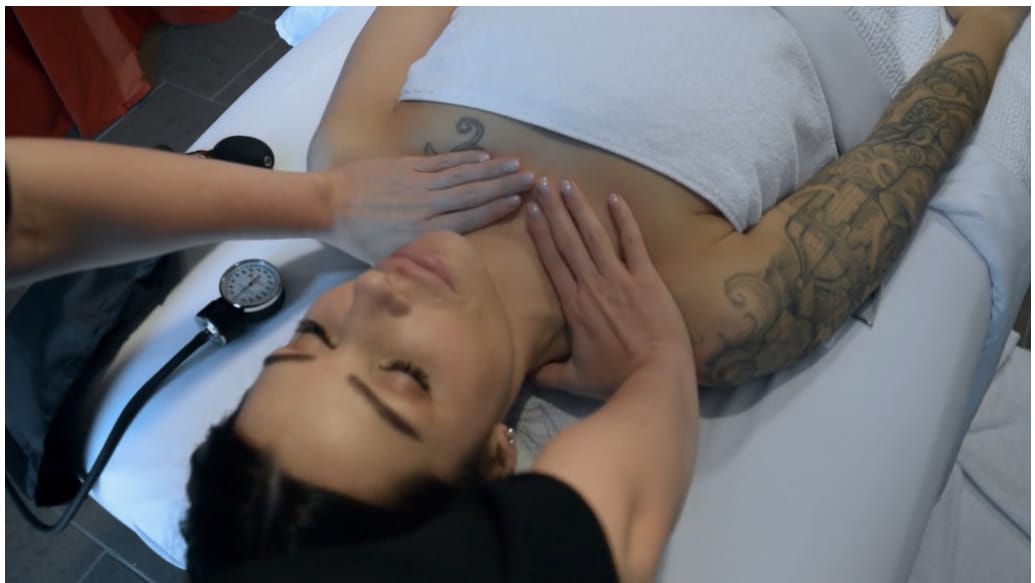
Yes, facial lymphatic drainage can be worth adding to your treatment menu if you serve clients who want a gentle, relaxing service focused on temporary facial puffiness. The case for adding it is strongest when you can screen clients properly, deliver a consistent technique within your scope, and describe the likely result without promising a lifted face or permanent change.
For a massage therapist or esthetician, the first decision is not which facial to name or how to price it. It is whether you have the training and insurance coverage to offer the work safely. At ShapeFX Academy, we teach research-informed Brazilian lymphatic drainage with an emphasis on anatomy, safety, consultation, technique and business decisions. Those foundations are useful when evaluating a facial service, but you should confirm that any training you choose covers facial and neck work specifically before offering it.
If those foundations are in place, start small. A focused add-on lets you learn whether your clients value the experience before you build a standalone treatment around it. If your clients mainly need medical swelling management or post-surgical care, a cosmetic facial service is not an interchangeable answer. Those situations call for different screening, training and coordination with the treating provider.
What is facial lymphatic drainage?
Facial lymphatic drainage is a light-touch manual treatment intended to support the movement of fluid through the superficial tissues of the face and neck. It is different from deep facial massage: more pressure is not necessarily more effective, and forceful sculpting is not the goal. Practitioners generally work with an understanding of facial and cervical anatomy, using controlled pressure, an appropriate sequence and continual attention to client comfort.
For a cosmetic client, the most useful way to explain the service is straightforward: it is a gentle treatment that may temporarily soften the appearance of puffiness and feel relaxing. A client might notice that their face looks less puffy after an appointment, but that observation is not evidence of permanent lifting, fat loss or a change in facial structure. Results will vary, and not all facial fullness is caused by fluid that massage can influence.
That distinction matters commercially. A clear service description helps the right person book while reducing the chance that someone expects a substitute for skincare, an injectable treatment or medical care. If you also offer Brazilian lymphatic drainage for the body, explain that a facial treatment needs its own anatomical knowledge and treatment decisions. You cannot simply transfer a body sequence to the face.
Why might it earn a place on your menu?
It gives clients a specific reason to book
Some clients can describe what they want more easily than they can name a modality: they feel puffy, want a gentle treatment or would like to look refreshed before an event. A facial lymphatic drainage service gives you a way to discuss those goals without presenting every facial concern as a medical problem. It can appeal to people who already book facials or massage, as well as clients who prefer lighter work.
Ask what the client means by puffiness rather than assuming every person has the same concern. Is it an occasional appearance they have noticed before? Is it new, persistent, painful or one-sided? The answer changes whether you proceed, postpone or suggest medical assessment. Good consultation is part of the service, not an obstacle to selling it.
It can fit an existing appointment
A focused facial sequence may make sense as an add-on to a suitable massage or facial. A dedicated booking may suit a practice whose clients already ask for targeted facial work. Neither format is inherently better. An add-on is easier to test; a standalone service gives more room for consultation, treatment and discussion afterward.
Think in terms of the whole booking block, not just hands-on time. You may need time to review intake answers, position the client comfortably, work without rushing and document what happened. If an add-on pushes the rest of the appointment behind schedule, it is not as efficient as it first appears.
It offers a clear experience without dramatic promises
Light, attentive facial work can stand on its own as a calming treatment. That is important because not every client will see a visible change, and a good service should not depend on a dramatic before-and-after image to justify its value. Comfort, clear communication and a treatment that matches the client's preferences are legitimate reasons for someone to return.
These are business reasons to consider the service, not predictions about demand or income. Before committing menu space, check whether your own clients ask about facial puffiness, whether you can treat them within your scope, and whether the booking makes sense alongside your existing services.
When should you hold off?
Facial lymphatic drainage is not a good addition simply because it is popular online. Wait if your education does not address facial and neck anatomy, if your insurer has not confirmed coverage, or if you cannot confidently distinguish a cosmetic concern from a reason to refer. The same applies if your menu description would need to promise permanent sculpting to attract bookings. A service built around claims you cannot support will be difficult to explain honestly in the treatment room.
Also consider your existing client base. If most clients come to you for a specific skincare procedure, an add-on may need careful timing and provider guidance. If your practice focuses on complex swelling or surgical recovery, you need a treatment pathway designed for those needs rather than a cosmetic facial label. Our comparison of Brazilian lymphatic drainage and manual lymphatic drainage explains why similar language should not obscure different treatment goals.
How to evaluate and launch the service
We recommend a simple sequence of decisions: check fit, check competence, design the booking, then test the offer. Each stage should give you a reason to continue or pause. This is more useful than writing an attractive menu listing first and sorting out safety afterward.
Step 1: Define the client and the outcome
Write down who the treatment is for in plain language. A suitable starting audience might be existing clients who ask about occasional facial puffiness or want a gentle facial massage. Then define the experience you can reasonably offer: light-touch work, attention to comfort and the possibility of a temporarily refreshed appearance.
Set the boundary just as clearly. You are not offering a permanent facelift, facial fat reduction or a treatment for unexplained swelling. You are not promising that everyone will look different afterward. This boundary makes consultations easier because you can say what the service does without implying that it addresses every concern.
Step 2: Check training, scope and insurance
Review your professional scope, local requirements and policy language before putting the service online. Being trained in massage or aesthetics does not automatically answer whether you are covered for every facial technique, a treatment following injectables or work after surgery. If you are unsure, ask the relevant regulator or insurer about the service you intend to perform, using an accurate description of the work.
Look closely at the training itself. It should help you understand the anatomy you are working with, how to adjust pressure and direction, which client histories change your plan, and when to decline treatment. A video of hand movements is not a substitute for those decisions. If you are comparing courses, our guide to online and in-person lymphatic drainage training can help you decide what kind of learning format fits your needs.
Step 3: Build an intake and referral process
Ask about the client's goal and relevant health history before touching the face or neck. Include questions about recent facial procedures, injections, dental work, surgery, infection, skin changes and swelling under medical care. Make space for the client to describe what is new or unusual rather than relying only on tick boxes. Your intake should support an actual decision: proceed, modify, postpone or refer.
If a client describes swelling that is sudden, unexplained, painful or accompanied by other concerning symptoms, do not treat it as an ordinary beauty concern. A cautious referral protects the client and keeps your service within its intended purpose. Our lymphatic drainage intake guide offers a broader framework for making screening questions useful in practice.
Step 4: Design one repeatable booking
Choose a format you can deliver consistently before adding multiple versions. For example, a short add-on might fit an existing appointment if you have enough time to screen and perform it without rushing. A standalone booking makes more sense if consultation is substantial or your clients prefer dedicated facial work. These are service-design choices, not prescribed treatment lengths.
Map the full client journey. What does the booking page say? When does the client complete intake? How will you obtain consent for facial and neck contact? What will you do if their answers change your plan? How will you document their response? A polished sequence is valuable only if the steps around it are equally clear.
Step 5: Pilot it with existing clients
Start with clients who already know your practice and are appropriate candidates. Tell them what the treatment is intended to do, invite candid feedback and note whether the appointment felt comfortable and worthwhile to them. You do not need to turn every visit into a photo opportunity. Ask what brought them in, whether the service matched their expectations and whether they would choose it again.
Review the business side alongside client feedback. Did the booking fit your schedule? Did consultation take longer than anticipated? Did you have to decline clients because the menu wording attracted the wrong concerns? Adjust the description or format before promoting the service more widely. If you choose to take photos, obtain consent and use consistent conditions. Our guide to photographing lymphatic drainage results ethically explains why images need context.
Facial add-on or standalone appointment?
An add-on can be the practical first choice for a therapist who already has suitable clients on the table. It gives you a chance to assess interest without filling a separate booking slot. The trade-off is limited time: if you cannot complete intake, consent and a coherent treatment within the appointment, the add-on is too compressed.
A standalone facial lymphatic drainage appointment gives the service a clearer identity. It can give you space to discuss expectations and tailor the session. The trade-off is that it must justify its own booking block, so your description and pricing need to reflect the whole appointment rather than only the time spent performing manual work.
A combined facial may suit an esthetician whose clients already want skincare and massage in one visit. Be careful not to imply that lymphatic work changes the effects of other products or procedures. If a client has recently had an injectable or another facial treatment, follow the treating provider's instructions before incorporating massage.
Start with the format you can deliver well. You can add another version later if client questions and your schedule support it. Several near-identical menu entries tend to make the choice harder for clients, not easier.
Screening and safety: where your judgment matters most
A gentle service still requires careful screening. ShapeFX's guidance on lymphatic drainage identifies acute infection or inflammation and open wounds as reasons to avoid treatment; our post-operative guidance also flags fever, cellulitis and suspected deep vein thrombosis as serious concerns. Sudden swelling or shortness of breath should not be handled as a routine facial appointment. Refer the client for appropriate medical assessment instead of trying to massage away an unexplained symptom.
For facial work, pay particular attention to the treatment area and recent history. An active skin problem, a recent procedure or instructions from an injector or surgeon may change what you can safely do. Ask before assuming the client will volunteer those details. When advice is unclear, postpone rather than improvise a waiting period.
Post-surgical clients need a separate conversation. Our post-operative lymphatic drainage guidance describes gentle work with attention to healing tissue, and emphasizes waiting until drains are removed and incisions have healed. That guidance should not be turned into a universal clearance rule for facial surgery. Follow the treating provider's instructions and seek training appropriate to the procedure. The ShapeFX Method Masterclass is not intended as training for clients within the first two to three months after surgery.
Finally, document your reasoning. Record what the client reported, any relevant provider instructions, what treatment you performed and how the client responded. Good notes help you plan future appointments and make it easier to recognize when a familiar client presents with something different.
Best practices for technique and client communication
- Let anatomy guide the work. Learn the facial and neck structures relevant to your technique rather than memorizing a social media sequence. Adapt the treatment to the client's presentation and training.
- Use light, controlled contact. A client should not have to tolerate painful pressure to receive a lymphatic-focused facial. Ask about comfort and adjust rather than treating redness or discomfort as proof of effectiveness.
- Explain the likely result before treatment. Say that any visible reduction in puffiness may be temporary. This lets a client appreciate the experience without feeling that they were promised a lasting change.
- Keep consent specific. Describe where you plan to work, especially around the neck and face, and ask about areas the client would prefer you avoid.
- Make referrals normal. You do not need to identify the cause of unusual swelling to recognize that it is outside a cosmetic appointment. A referral is a sound professional decision, not a failed booking.
- Review outcomes with the client. Ask what felt helpful, whether anything was uncomfortable and what they noticed afterward. Use their feedback to guide future treatment rather than assuming a photograph tells the whole story.
Our approach to Brazilian lymphatic drainage places technique alongside consultation and safety. If you already work with the body, our discussion of pressure, pace and direction illustrates why careful execution matters more than simply adding force. For facial work, apply that principle through education specific to the face and neck.
How to describe and price the service honestly
Clear language is more persuasive than exaggerated language. A menu description could say: Gentle facial lymphatic massage focused on relaxation and the appearance of temporary puffiness. Your therapist will review your health history and tailor the appointment to your comfort. That tells clients what they are buying and signals that screening is part of professional care.
Avoid phrases such as “permanent facial sculpting,” “melts facial fat” or “removes toxins.” They set an expectation the treatment cannot reasonably meet. If your clients ask about detox, explain the difference between describing normal lymphatic function and claiming that a facial massage removes specific substances from the body. We explore that distinction in our guide to marketing lymphatic drainage without detox claims.
Price according to the complete booking, including consultation, documentation, supplies and room turnover, as well as your training and local costs. Avoid copying a price meant for a full-body service or choosing one simply because it sounds premium. ShapeFX's training discusses business positioning and pricing, but the price you set for facial work should reflect your actual service and market. If you offer an add-on, make its scope clear so a client does not expect a full standalone appointment compressed into a few minutes.
Rebooking should follow the client's preferences and response, not a claim that everyone needs a fixed number of visits. Some people may book when they want a relaxing facial; others may choose an appointment before an event. Explain that cosmetic changes can be temporary and let the client decide whether the experience is worth repeating. If you offer a package, make the purpose and terms clear rather than implying a guaranteed cumulative result.
What training should you look for?
Before enrolling in any lymphatic course for this purpose, ask a precise question: does the curriculum teach facial and neck assessment and technique, or is it primarily a body treatment course? Look for instruction in anatomy, safety, consent, pressure, sequencing and realistic client communication. If your goal is post-procedure facial care, confirm that the training addresses that specific context and the limits of your scope.
ShapeFX Academy's ShapeFX Method Masterclass teaches a Brazilian lymphatic drainage sequence with lymphatic anatomy, safety, consent forms, technique variations, consultation, hands-on practice, before-and-after photography guidance and business advice. There is an online self-paced option as well as in-person group, semi-private and private training. It is a foundation for practitioners building a Brazilian lymphatic drainage offering, not a reason to assume that every facial or post-operative technique falls within a graduate's practice.
For someone still deciding between learning formats, consider how you will check your pressure, positioning and sequencing. Self-paced study offers flexibility, while supervised practice gives you an opportunity to receive feedback on your hands-on work. The useful choice is the one that prepares you for the clients you actually intend to treat. Our article on what Brazilian lymphatic drainage certification means is a helpful starting point for questions about credentials and scope.
Frequently asked questions
Can an esthetician offer facial lymphatic drainage?
It depends on local scope rules, training and insurance coverage. Facial work may fit an esthetician's existing services, but do not assume that coverage for facials includes every lymphatic or post-procedure technique. Check the service you intend to offer with your insurer and relevant regulator. Our scope and insurance guide for estheticians outlines the questions to ask.
Is facial lymphatic drainage the same as a sculpting facial?
Not necessarily. “Sculpting facial” can describe different massage approaches and client expectations. If you call your service lymphatic drainage, the technique and description should reflect light-touch, anatomically informed work rather than forceful reshaping. Explain what your treatment actually includes instead of relying on a fashionable label.
Will it permanently define the jawline or reduce facial fat?
No. A client may see a temporary change in the appearance of puffiness, but facial lymphatic drainage should not be sold as permanent contouring or fat reduction. If a client wants a different kind of result, clarify their goal before booking.
Can I add it immediately after a facial injectable?
Do not set a blanket timing rule. Ask what the client had done, follow the injector's instructions and obtain provider guidance when needed. If you cannot establish whether massage is appropriate for the area, postpone the work.
Can a regular facial lymphatic service be offered after surgery?
Do not treat cosmetic facial work as a substitute for post-operative care. Surgical clients need procedure-specific instructions and an appropriately trained practitioner. Follow the surgeon's guidance, respect healing tissue and do not proceed when clearance or the treatment plan is unclear.
Should I start with an add-on or a standalone service?
An add-on is often a sensible way to test interest among existing clients, provided there is enough time for intake and a complete treatment. Choose a standalone booking if the consultation or treatment cannot be done well within an existing appointment. Review client feedback and scheduling before expanding the menu.
Does the ShapeFX Method Masterclass qualify me to offer facial lymphatic drainage?
Its curriculum covers Brazilian lymphatic drainage foundations, including anatomy, safety, consent and technique variations. Before offering a dedicated facial service, check the facial and neck content of any training against your intended technique, scope and insurance requirements. Do not assume a body-focused qualification automatically covers every facial application.
The bottom line
Add facial lymphatic drainage if it answers a real client request and you can provide it with appropriate training, screening and honest expectations. Start with one clearly defined service, learn from your clients and expand only when the format works clinically and commercially. If you are building the broader lymphatic drainage foundations for your practice, explore the ShapeFX Academy training options and choose education that matches the work you plan to offer.